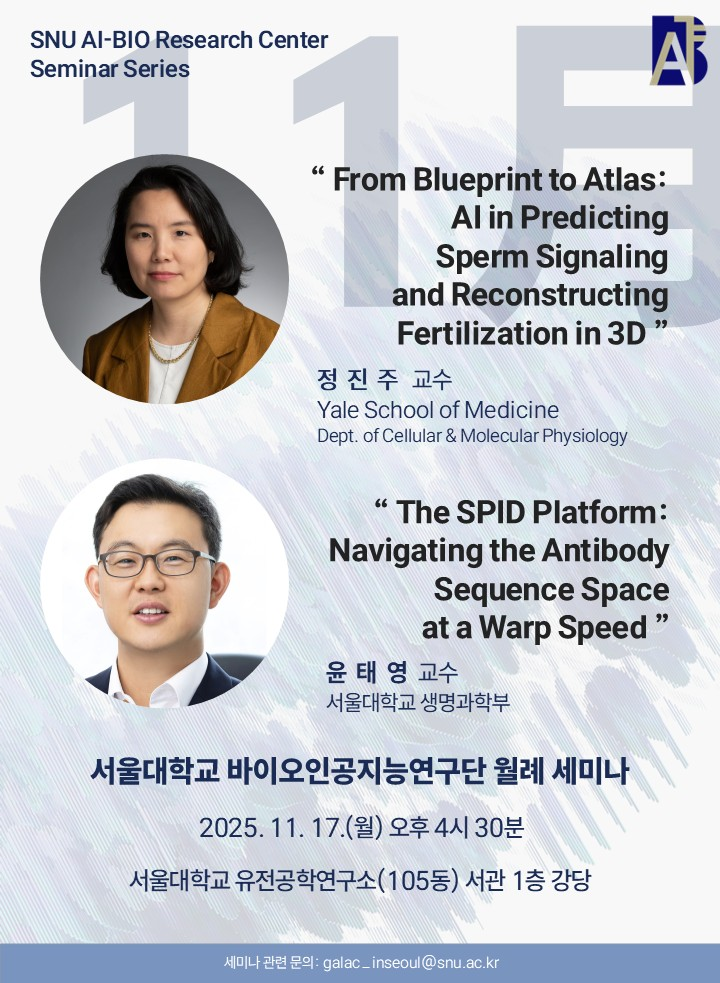


2025년 서울대학교 바이오인공지능연구단 11월 정기월례회
** 논문 게재 예정 내용이 포함되어 있는 세미나로, 영상이 업로드 되지 않습니다.
–
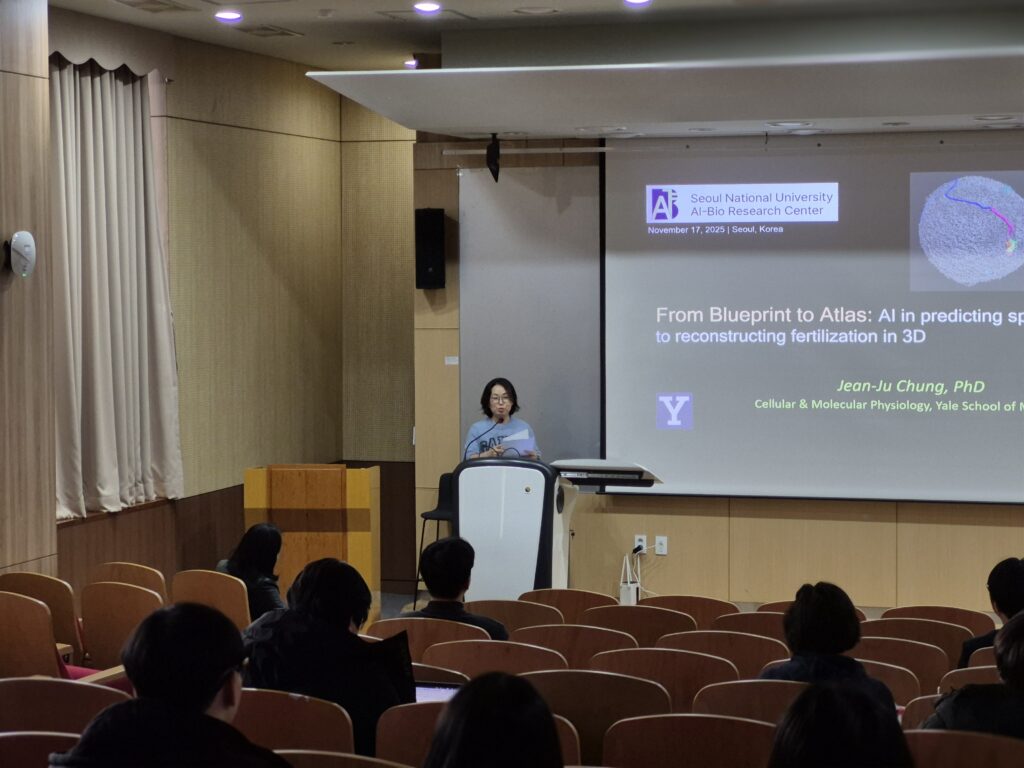
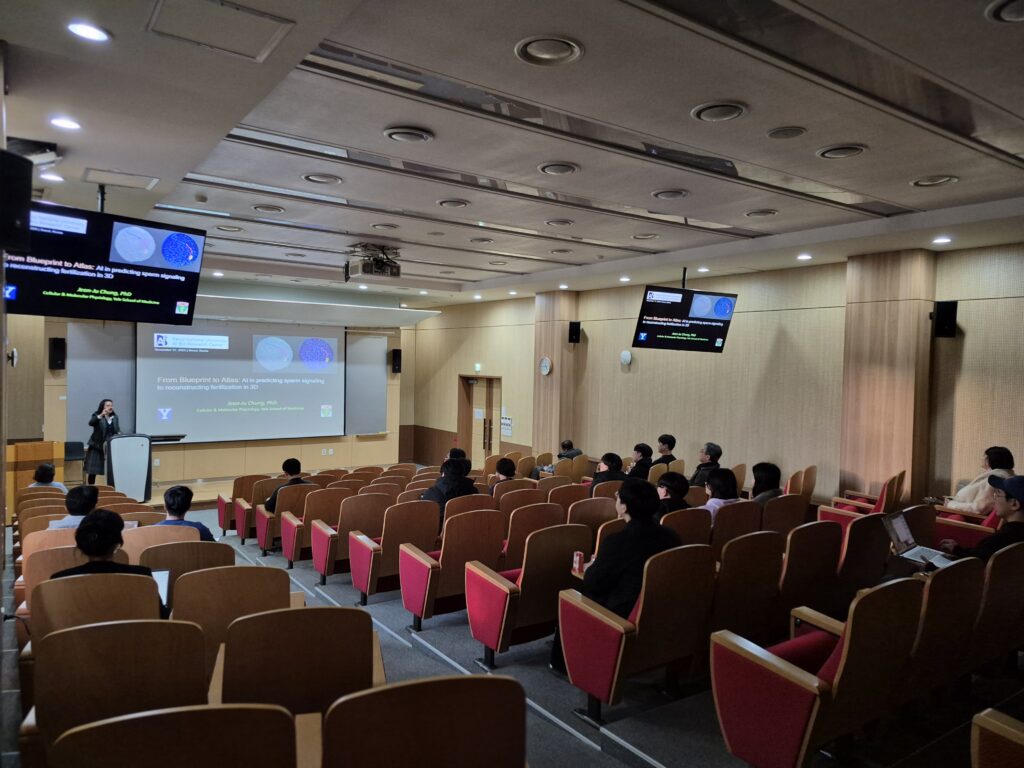
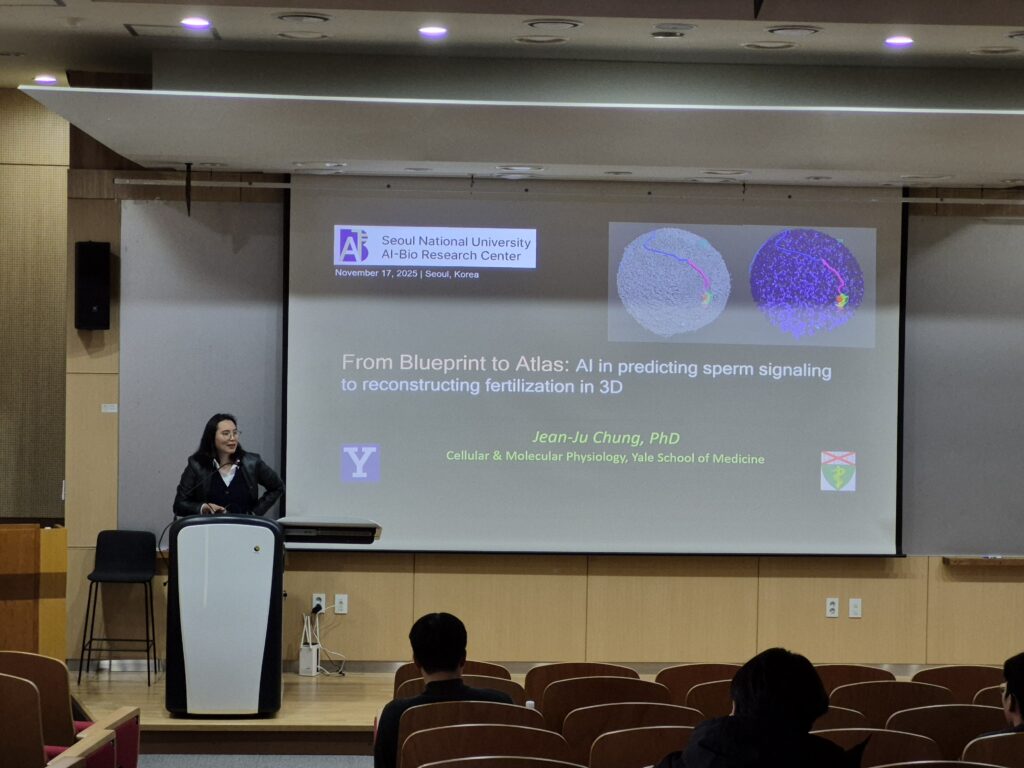
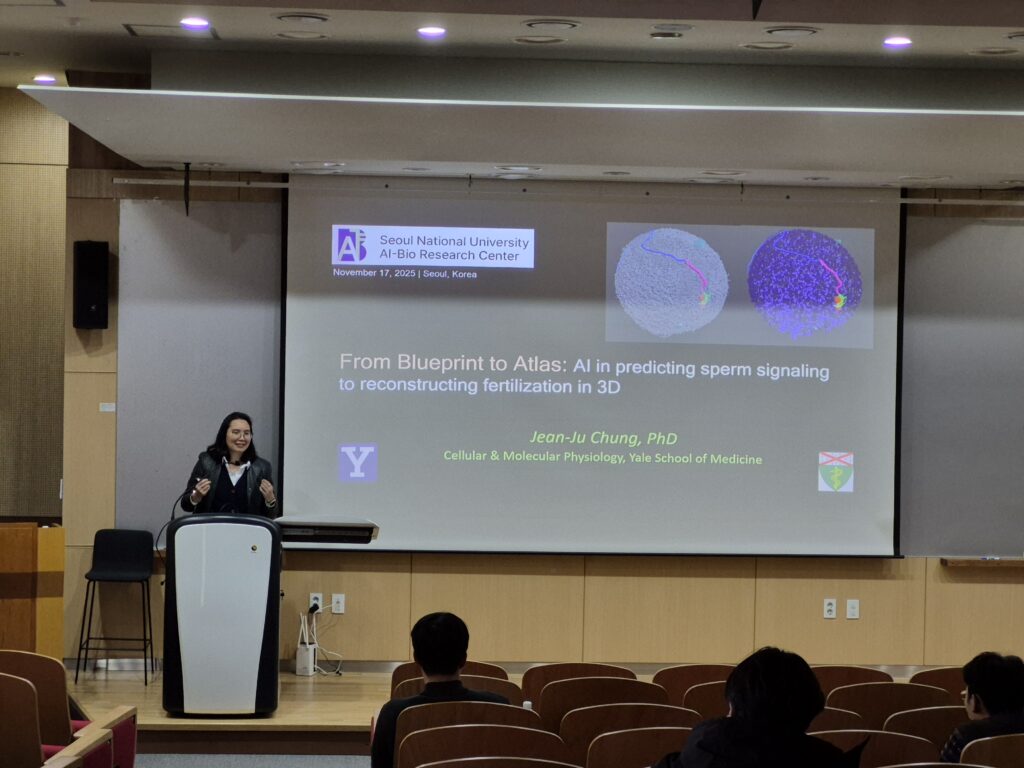
정진주 교수 (Yale School of Medicine, Dept. of Cellular & Molecular Physiology) : From Blueprint to Atlas: AI in Predicting Sperm Signaling and Reconstructing Fertilization in 3D
Understanding the molecular choreography of mammalian fertilization, from initial signaling to the complete cellular merger, presents immense challenge due to its complexity and transient nature. This talk will present a multi-scale AI-strategy to dissect this fundamental process, moving from a molecular blueprint to a cellular atlas. We first employ predictive AI to engineer sperm signaling by targeting the critical sperm CatSper ion channel. We then use machine learning segmentation to reconstruct that first complete, high-resolution 3D atlas of the fertilizing sperm-egg complex in situ.
–
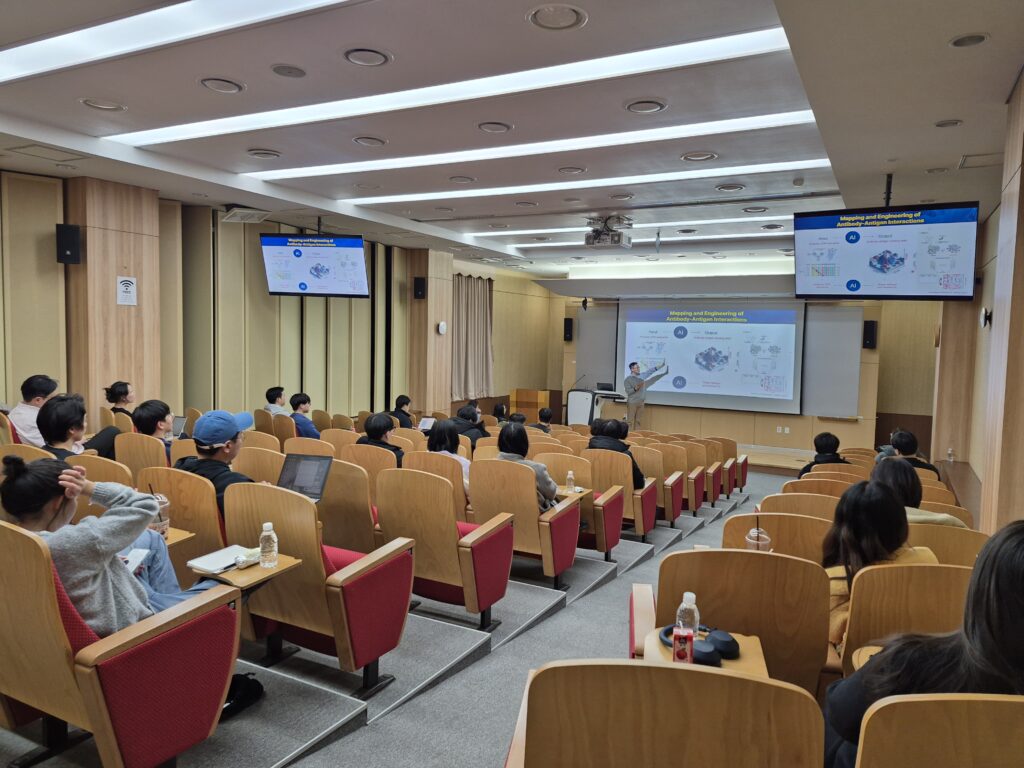
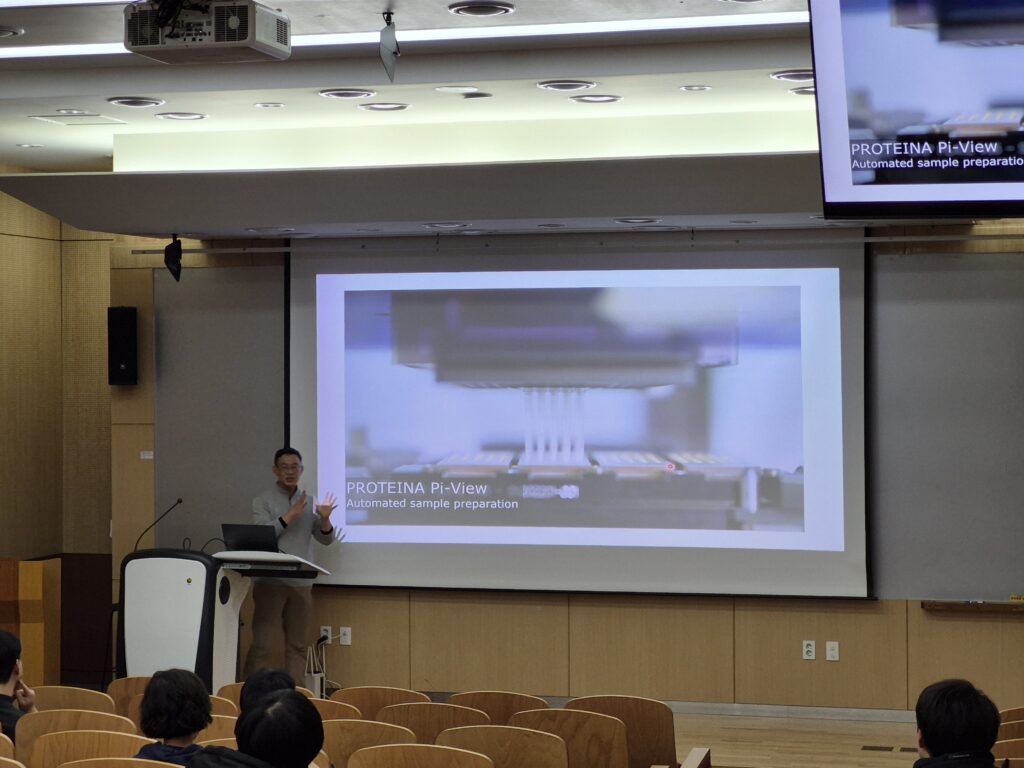
윤태영 교수 (자연과학대학 생명과학부) : Biological Insights Provided by Artificial Intelligence
Antibodies play a central role in adaptive immunity by recognizing antigens through highly specific interactions mediated by their Complementarity Determining Regions (CDRs). These typically unstructured loops undergo substantial conformational rearrangements upon antigen binding—induced fit-like mechanisms that remain poorly understood, even by the most advanced AI models for protein structure prediction and design. Here, we present a novel approach leveraging the Single-Protein Interaction Detection (SPID) platform, repurposed to systematically map the local interaction landscapes of antibody-antigen pairs with unprecedented resolution and throughput. SPID enables precise quantification of dissociation constants and antibody material properties across thousands of CDR variants per week—achieving accuracy on par with conventional gold standards such as Surface Plasmon Resonance (SPR) and Bio-Layer Interferometry (BLI), but at a significantly enhanced scale. Using targeted CDR editing and high-throughput screening, we delineate optimization routes that improve both antigen-binding affinity and biophysical developability. We further demonstrate how SPID-generated datasets can power deep learning approaches, significantly enhancing predictive modeling of antibody-antigen interactions.
–